
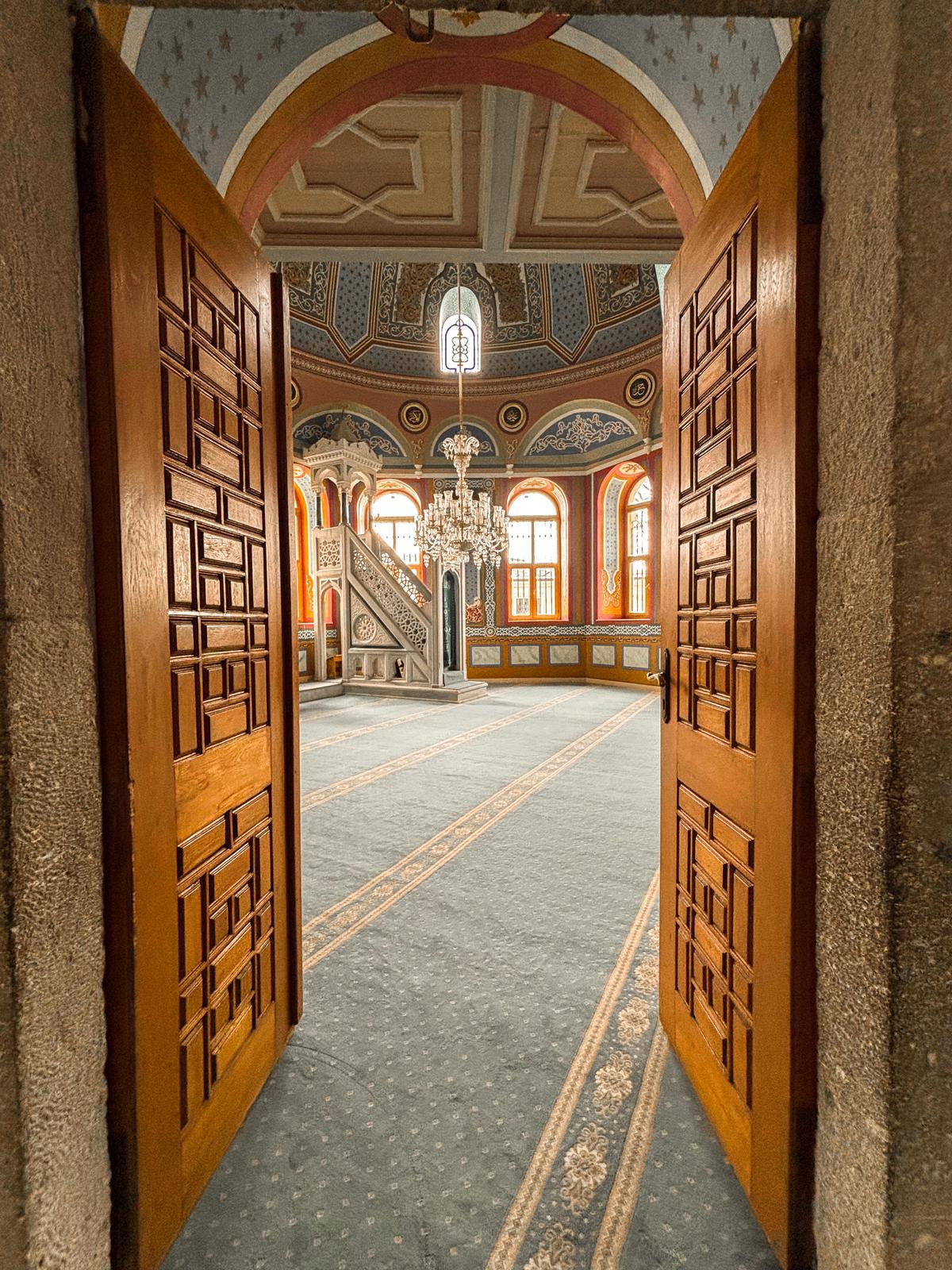
Okmeydanı Mosque-Church-Synagogue
A place where beliefs stand side by side, and hearts are united.
The mosque, church, and synagogue located in the heart of the Darülaceze Okmeydanı Campus are not only architectural structures; they are symbols of coexistence, respect, and social inclusivity. Founded in 1895, Darülaceze has embodied its commitment to opening its doors to everyone regardless of religion, language, race, or sect through these structures.
Darülaceze Mosque
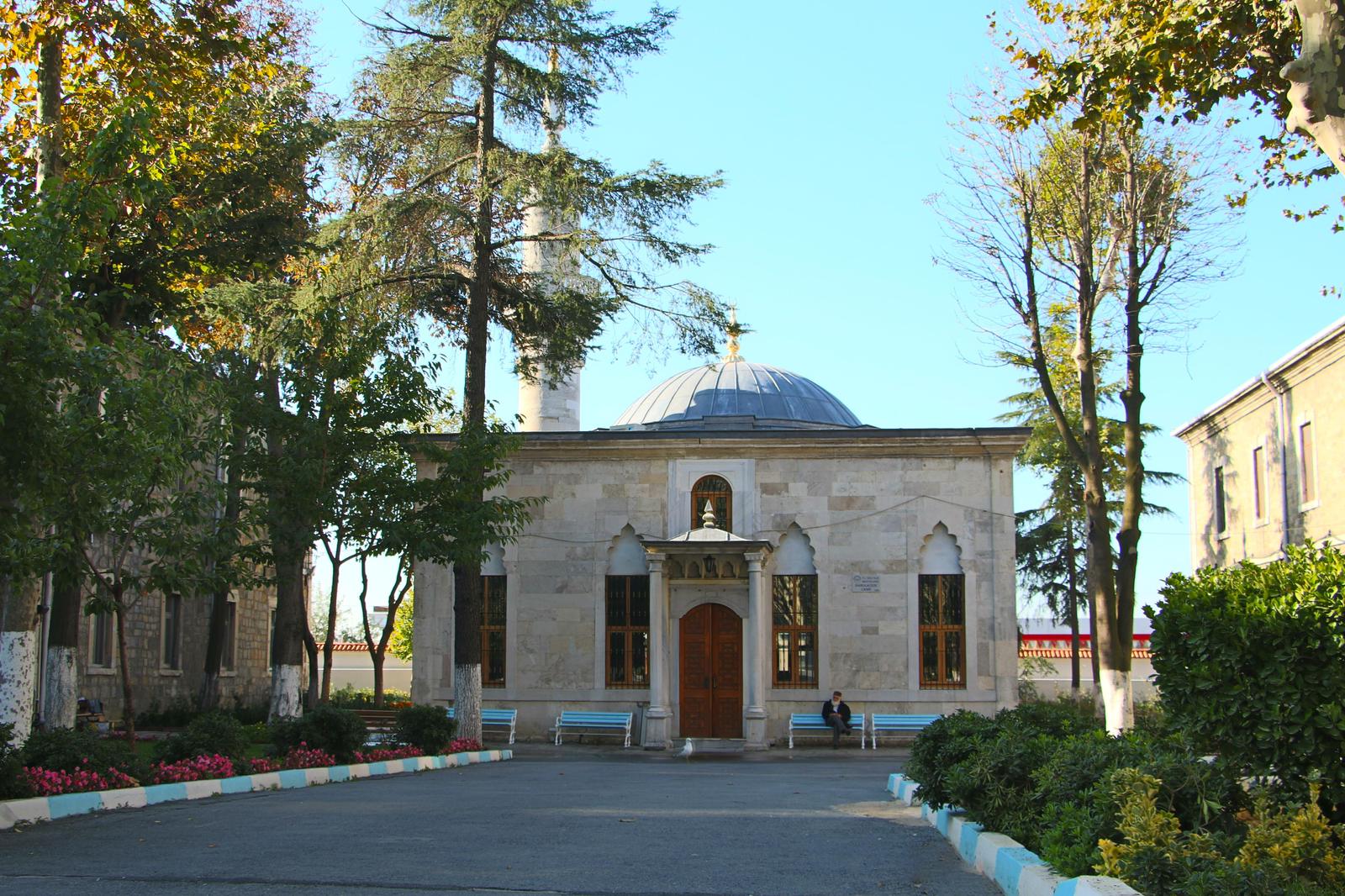
Darülaceze Mosque
Located in the center of the main campus, near the entrance.
Year of construction: 1895
Architectural style: 19th-century Ottoman civil architecture + European-influenced planning
Source: Assoc. Prof. Dr. Nuran Yıldırım, History of the Istanbul Darülaceze Institution
The Darülaceze Mosque, unlike classical Ottoman mosques, is a two-story, unpretentious but elegant structure situated within a courtyard.
- The mosque plan is a symmetrical rectangular structure.
- A pitched roof is preferred instead of a dome.
- The interior has a wooden ceiling, and its decorations feature penwork ornamentation and star motifs.
- The mihrab is simple; The pulpit is designed with classic Ottoman stonework. The last prayer area is spacious, and the women's section is located on the second floor. Lighting is based on natural light through windows. The building is one of the rare examples in 19th-century Istanbul public buildings where classical understanding is blended with Westernization influences.
St. George Church

St. George Church
Located between apartments 7 and 8, in the northeast corner
Built to serve the Greek Orthodox faith.
Name: Hagios Georgios Church
Source: Assoc. Prof. Dr. Nuran Yıldırım, History of the Istanbul Darülaceze Institution
- It is a simple structure with a rectangular plan, a single nave, and a wooden roof.
- The interior features a triple apse structure, a wooden iconostasis (icon bay), and wall decorations with religious figures.
- The walls contain icons depicting saints such as Saint Nicholas, Saint John, and Saint Luke.
- The entrance section with stairs reflects the traditional approach of Greek Orthodox churches.
- There is a small wooden balcony (gallery) on the upper floor.
Although the church is not currently open for worship, it is architecturally preserved and presented to visitors as a symbolic structure representing the institution's multi-faith nature.
The building is a rare example of a blend of classical understanding with Westernization influences seen in 19th-century public buildings in Istanbul. These are examples.
Midrash Hospice

Midrash Hospice
Located directly opposite the church, at the northern end
Year of construction: After 1895
Name: Midrash Darülaceze
Source: Assoc. Prof. Dr. Nuran Yıldırım, History of the Istanbul Darülaceze Institution
The synagogue, built for Jewish residents to perform their worship, is one of the rare Jewish places of worship built in a social service institution during the Ottoman period.
- The building has the same architectural composition as the church and mosque, with equal size and a simple exterior.
- The Aron HaKodesh (Torah cabinet) in the interior emphasizes the religious function of the building.
- It is reported that the Hebrew word “Shalom” is written above the entrance of the synagogue.
- The panels used during prayer and the wooden seating groups have been preserved.
- The use of lighting was planned to create a dimmer and mystical atmosphere.
- Lighting is based on natural light through the windows.
Midrash Darülaceze is one of the three religions within a single complex in Istanbul.
It is considered one of the rare architectural examples where a temple is located.What do these structures tell us today?
These three places of worship are the embodiment of respect for different faiths at the architectural level.
- The mosque is actively used,
- The church and synagogue are introduced on visiting days and opened for special commemorations.
- Especially during institutional visits, these structures attract the attention of visitors as symbols that illustrate Darülaceze's core values and historical heritage.
Darülaceze has shown that religions can coexist through its places of worship; it is an institution that not only sustains but also unites.